Factory and Warehouse Security: Effective Strategies to Prevent Theft and Unauthorized Access
Introduction
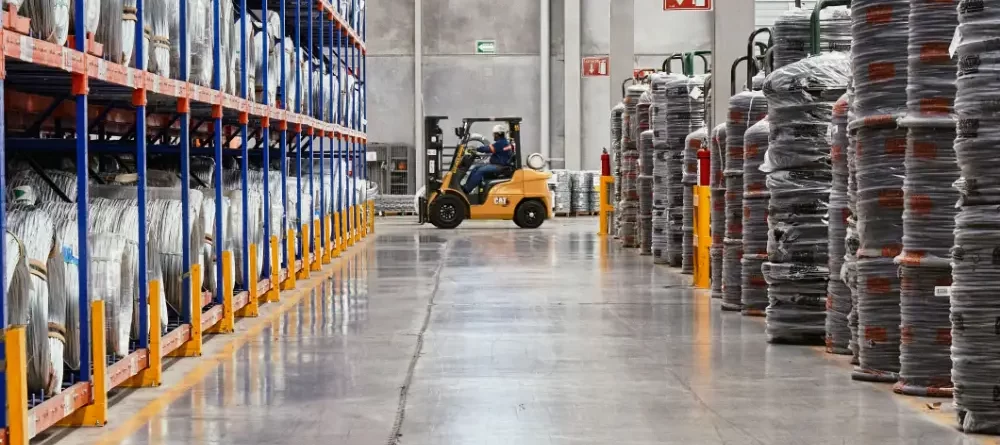
Factories and warehouses are essential to industrial and commercial operations. They contain valuable machinery, raw materials, finished products, equipment, and other resources that businesses depend on to maintain productivity and meet customer commitments.
As facilities grow and daily operations become more complex, protecting these assets becomes increasingly challenging. Multiple entrances, external suppliers, contractors, employees, delivery vehicles, and large storage areas can create security gaps if access and operational procedures are not properly managed.
Security threats are not limited to theft. They may also include unauthorized entry into restricted areas, asset tampering, property damage, and access to critical operational spaces.
For this reason, effective factory and warehouse security requires more than a single protective measure. It involves a structured strategy that combines risk assessment, perimeter protection, access management, appropriate security technologies, and clear incident response procedures.
This guide explores the main security challenges facing industrial facilities and explains how businesses can develop a more effective protection strategy.
1. Understanding the Main Security Risks in Factories and Warehouses
Security threats vary according to a facility’s location, size, operating environment, and business activities. However, several risks commonly affect industrial and storage environments.
- Theft and Asset Loss: Products, raw materials, tools, and machinery may be exposed to theft when access procedures are weak or internal controls are insufficient.
- Unauthorized Access: Certain production areas, control rooms, and storage locations should only be accessible to approved personnel.
- Unsecured Entry Points: Side entrances, perimeter fences, service areas, and vehicle gates may become potential security weaknesses when they are not properly controlled.
- Inventory Manipulation: Poorly organized receiving, dispatch, and stock transfer procedures can make losses difficult to identify and investigate.
- Internal Security Risks: Misuse of permissions or failure to follow approved procedures may create risks even within an organization’s own workforce.
- Operational Disruption: Security incidents can interrupt production, delay deliveries, damage assets, and increase operating costs.
Understanding these risks is the first step toward selecting appropriate security measures rather than investing in equipment that does not address the facility’s actual problems.
2. Start with a Security Risk Assessment
Before implementing any security project, businesses should conduct a comprehensive assessment of the facility.
The assessment should cover the entire site, including perimeter boundaries, entrances, exits, storage areas, production zones, technical rooms, and loading and unloading locations.
The process should also consider the nature of the business, valuable assets, workforce size, operating schedules, supplier activity, and the different ways unauthorized individuals could reach restricted areas.
Important assessment questions include:
- Are all entrances and exits covered by clear access procedures?
- Can unauthorized individuals reach restricted areas?
- Are visitors and suppliers properly registered?
- Do employees have access permissions appropriate to their responsibilities?
- Are there weaknesses in perimeter protection?
- Are security incidents handled through documented procedures?
- Can management maintain effective oversight of critical areas?
A professional assessment helps prioritize risks and identify where security investments will have the greatest practical value.
3. Strengthening the Facility Perimeter
Factory and warehouse protection begins at the external boundaries of the site.
Perimeter fences, vehicle gates, pedestrian entrances, and external service areas represent the first layer of protection against unauthorized entry.
Effective perimeter security may include:
- Boundary Protection: Inspecting fences and external barriers to identify openings, damage, or vulnerable sections.
- Controlled Entrances: Defining authorized entry points and reducing unnecessary access through informal or secondary entrances.
- Appropriate Security Gates: Selecting entrance solutions that match vehicle and pedestrian movement requirements.
- External Lighting: Providing suitable illumination around entrances, boundaries, and outdoor operating areas.
- Vehicle Access Management: Establishing clear routes, waiting areas, and vehicle entry procedures according to site policies and safety requirements.
A well-organized perimeter makes it easier to manage movement into and out of the facility.
4. Restricting Access to Sensitive Areas
Not every employee, supplier, or visitor needs access to every part of an industrial facility.
Some locations contain expensive equipment, sensitive materials, operational information, or critical infrastructure. These areas should have access restrictions based on legitimate business requirements.
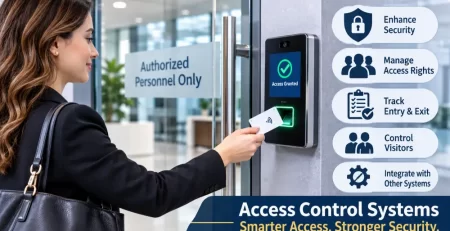
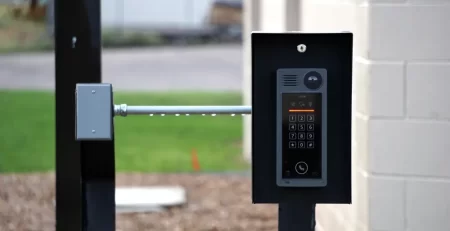
Access Control Systems help organizations define who can enter specific areas and under what conditions.
Different permission levels can be established to:
- Allow employees to access their designated work areas.
- Restrict control rooms to authorized personnel.
- Provide temporary access to contractors and suppliers.
- Limit entry to certain locations during approved working hours.
- Revoke permissions when employment or a service assignment ends.
This approach reduces opportunities for unauthorized access and improves accountability throughout the facility.
5. Managing Employees, Visitors, and Suppliers
Security management becomes more complicated when a facility receives large numbers of people every day.
Factories often deal with transport companies, suppliers, contractors, maintenance teams, and temporary workers. Without clear procedures, individuals may enter the premises without proper authorization or an understanding of where they are permitted to go.
A structured visitor and supplier management process should include:
- Recording relevant visit information according to company policy.
- Identifying the employee or department responsible for receiving visitors.
- Defining the areas that visitors are authorized to access.
- Issuing temporary identification or access credentials when required.
- Reviewing departure procedures and disabling temporary permissions when appropriate.
Vehicle entry and exit should also be organized, with suitable documentation for deliveries and collections.
These procedures help reduce confusion and improve control over the movement of people and vehicles.
6. Building a Multi-Layered Security Infrastructure
One of the most common security mistakes is relying on a single protective technology to secure a large facility.
A strong entrance gate cannot address every possible threat, and an access control system alone may not meet all the facility’s security requirements.
A multi-layered approach combines complementary technologies to provide broader protection.
Depending on the risk assessment, the solution may include:
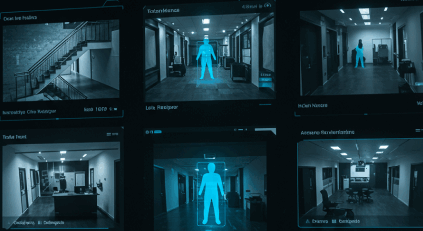
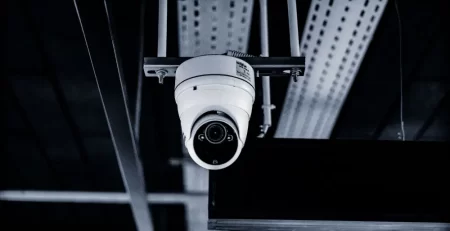
- CCTV Surveillance Systems: Used to monitor critical areas and document relevant events.
- Access Control Systems: Designed to manage individual permissions and restrict entry to designated locations.
- Security Turnstiles and Gates: Help organize pedestrian movement through controlled entry points.
- Intrusion Alarm Systems: Can detect certain unauthorized entry events in designated areas, depending on system design.
- Fire Alarm Systems: Support early warning and emergency procedures to help protect people and property.
- Networking and Infrastructure Solutions: Provide the connectivity required for security equipment and integrated technologies.
The appropriate combination should be based on the facility’s actual risks, not simply on installing as many devices as possible.
7. Protecting Inventory, Raw Materials, and Finished Products
Warehouses require specific procedures for protecting stored goods because inventory often moves through several departments before reaching its final destination.
Businesses should establish clear responsibilities for receiving, storing, transferring, and dispatching products.
Useful measures include:
- Restricting access to designated storage areas.
- Organizing product receiving and dispatch procedures.
- Separating raw materials from finished goods where necessary.
- Documenting stock transfers between departments.
- Reviewing discrepancies between records and physical quantities.
- Establishing procedures for damaged or missing products.
When these measures are supported by suitable security technologies, businesses can improve accountability, identify problems more effectively, and reduce the likelihood of recurring losses.
8. Developing an Effective Security Incident Response Plan
Advanced security equipment cannot deliver its full value if employees do not know what to do when an incident occurs.
Businesses should establish clear procedures for responding to suspected theft, unauthorized entry, property damage, or unusual activity.
An effective response plan should define:
- Who is responsible for receiving incident reports.
- How employees should report security concerns.
- Which procedures apply to affected areas.
- How incidents and relevant information should be documented.
- When issues should be escalated to management or the appropriate authorities.
- How the organization will investigate causes and implement corrective actions.
Relevant employees should receive suitable training, and procedures should be reviewed regularly to confirm that they remain practical under real operating conditions.
9. Selecting Security Solutions That Match Your Budget
The objective of industrial security is not to purchase every available technology. It is to select the solutions that address the most important risks and deliver the best value for the business.
Implementation can be divided into stages according to priority.
Stage One: Addressing Essential Risks
Secure major entrances, inspect perimeter boundaries, organize pedestrian and vehicle access, and protect the most sensitive areas.
Stage Two: Developing Security Systems
Implement suitable surveillance, access control, security gates, and other technologies required by the facility.
Stage Three: Integration and Expansion
Connect compatible systems, improve infrastructure, and introduce additional capabilities as operational requirements develop.
Businesses should compare technical proposals rather than prices alone, paying attention to equipment quality, installation standards, maintenance arrangements, and technical support.
10. Reviewing and Updating Security Measures
Security requirements may change when a facility expands, introduces new production lines, changes storage arrangements, or increases its workforce.
A security strategy should therefore be reviewed regularly to ensure that it remains suitable for current operations.
Reviews may include inspecting security devices and gates, checking user permissions, evaluating visitor procedures, and testing relevant systems according to manufacturer instructions and site requirements.
Technical faults and necessary upgrades should be addressed promptly, with records maintained for inspections, maintenance activities, and system modifications.
Continuous evaluation helps organizations adapt their security infrastructure as the facility evolves.
Conclusion
Protecting factories and warehouses against theft and unauthorized access requires a coordinated security strategy rather than a single device or isolated procedure.
The process begins with understanding potential risks and identifying vulnerable areas. It then involves selecting suitable protective technologies, managing people and vehicles, establishing incident response procedures, and continuously reviewing system performance.
Investing in a well-designed industrial security infrastructure helps protect valuable assets, reduce avoidable losses, and support uninterrupted business operations.
Protect Your Factory or Warehouse with Safety Source
Do you own or manage a factory or warehouse and need a more effective way to protect your facility?
Do not wait for a security incident to reveal weaknesses in your existing arrangements. Start by identifying your facility’s priorities and exploring integrated protection solutions designed around your operational needs.
Safety Source can help you explore suitable security systems for your facility, including surveillance, access control, and alarm solutions.
Contact Safety Source today to discuss your factory or warehouse security requirements and find solutions that support the protection of your assets and operations.